


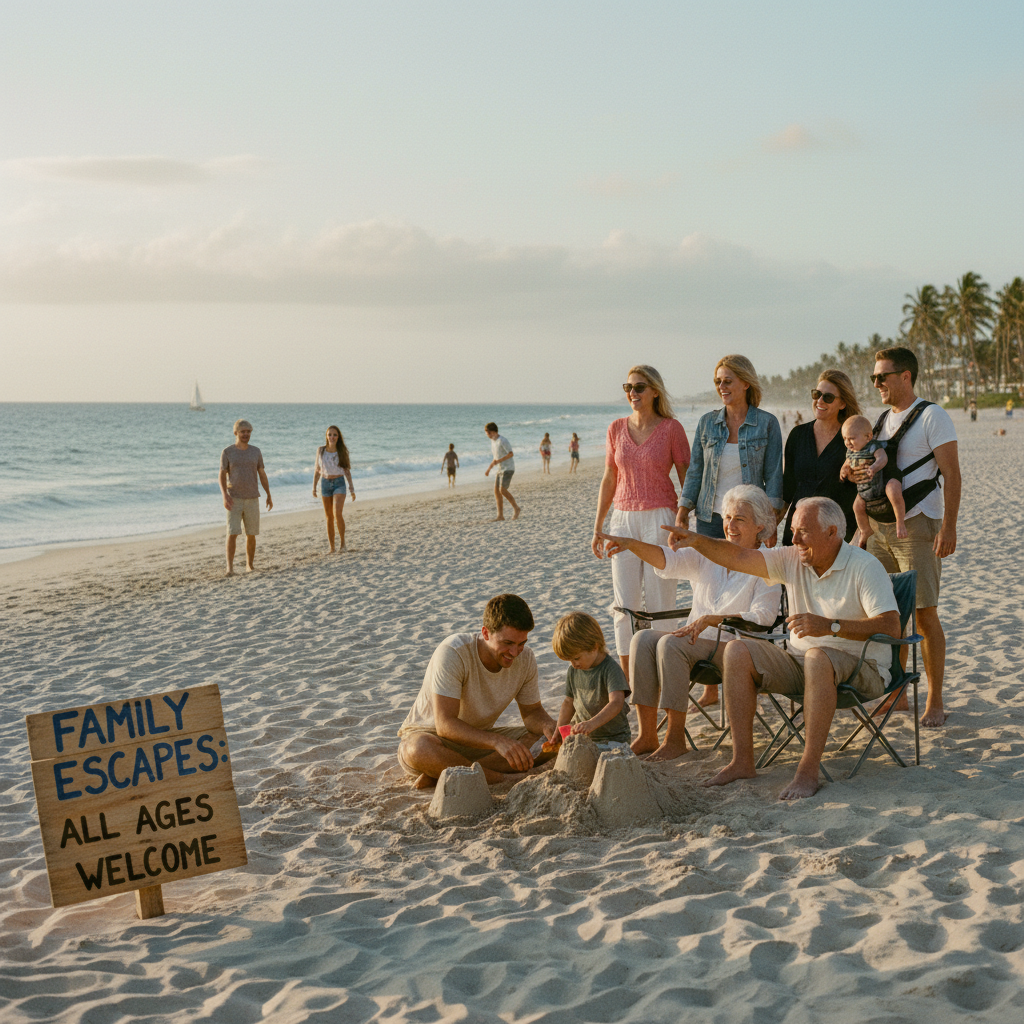
Multi-generational family vacations are complex travel experiences involving three or more generations, typically grandparents, parents, and grandchildren, designed to build shared legacy memories while accommodating vastly different mobility, energy, and interest levels. The most successful trips utilize a "Pace and Space" framework, which prioritizes accessible destination selection, ensures separate living quarters for privacy, and enforces a flexible itinerary that balances high-energy activities with mandatory downtime. By focusing on accessibility and transparent budgeting* upfront, families can navigate the logistical challenges of group travel to create a friction-free experience.
Navigating the Complexity of Multi-Generational Travel
Traveling with a group that ranges from age 2 to 82 requires a fundamental shift in mindset from "sightseeing" to "togetherness." The logistical load of a multi-gen trip is significantly heavier than a standard family vacation because you are managing three distinct biological clocks and mobility levels simultaneously.
The primary cause of conflict on these trips is not the destination, but a misalignment of expectations regarding energy expenditure. When you understand the physiological needs of each generation, you can craft an itinerary that prevents burnout and resentment.
Core Definition: The 'Pace and Space' Framework for Successful Group Trips
The "Pace and Space" framework is a strategic approach to planning that acknowledges that different generations move at different speeds and require different amounts of privacy. Ignoring this framework often leads to the "drag-along" effect, where the slowest member feels like a burden and the fastest member feels bored.
Defining the Distinct Needs of the Group
- 'Skippers' (Grandparents): This group often deals with mobility constraints or lower stamina. They may be early risers who fade by late afternoon. Their priority is usually quality connection without physical strain.
- 'Runners' (Parents): The "Sandwich Generation." They are often the planners, the financiers, and the peacekeepers. They carry the mental load and need moments of relief from parenting duties.
- 'Toddlers/Teens' (Grandkids): This group has the highest volatility. Toddlers need rigid nap schedules, while teens need autonomy and Wi-Fi. Their needs dictate the daily rhythm.
Key Takeaways: 5 Pillars of a Friction-Free Multi-Gen Vacation
To ensure the trip remains enjoyable rather than an endurance test, you must establish ground rules before booking. These five pillars act as a safety net against common travel stressors.
Mobility-First Destination Selection
Always plan for the least mobile person in the group. A destination is only viable if the 'Skippers' can navigate it with dignity. This means prioritizing locations with flat terrain, elevators, and minimal walking distances between key amenities.
The Necessity of Separate Living Quarters
"Togetherness" does not mean sleeping in the same room. Separate living quarters are non-negotiable for preserving sanity. Grandparents need a quiet retreat away from crying toddlers, and parents need privacy after the kids go down.
Transparent Budgeting Agreements
Money is the number one cause of family tension. Establish who is paying for what before you leave. Whether the grandparents are subsidizing the trip or everyone is going Dutch, clarity prevents awkward moments at the dinner table.
Built-in Downtime for Seniors and Naps for Kids
A successful itinerary is 50% activity and 50% rest. Schedule "quiet hours" every afternoon. This creates a synchronized break where toddlers nap, grandparents read or rest, and parents get a moment of silence.
The 'One Meal a Day' Rule for Togetherness
Do not force the group to eat every meal together. Breakfast schedules vary wildly, and lunch is often on the go. Commit to one shared meal a day, usually dinner, where the whole family gathers to recount the day’s adventures.
Planning Logistics: How to Plan a Multi-Generational Family Vacation
Executing a trip of this magnitude requires project management skills. You cannot "wing it" with 10+ people. Follow this phased approach to lock in the details without the drama.
Phase 1: The Democratic Selection Process (Using Polls)
Avoid an endless text chain of "I don't care, whatever you want." Create a survey using Google Forms or SurveyMonkey. Ask specific questions about budget caps, preferred climates, and non-negotiable dates. This data-driven approach removes emotion from the decision-making process.
Phase 2: Establishing a Budget and Payment Structure
Once a destination is chosen, appoint a "Treasurer." Determine if you will use a shared app like Splitwise for incidental expenses. If you are traveling during peak seasons, be aware that prices will surge.
Phase 3: Booking Flights and Travel Insurance
Coordinate flight arrivals so everyone lands within a similar window to share transfer costs. Travel insurance is mandatory for multi-gen trips; the statistical likelihood of someone getting sick or injured increases with group size and age.
Expert Tip: Managing Expectations for Holiday Travel
If you are planning a trip during Christmas or Thanksgiving, the stakes are higher. The pressure for a "perfect" holiday can ruin the vibe. For advice on navigating the chaos of booking during high-stakes windows, refer to The Procrastinator's Playbook: Your Guide to Last-Minute Christmas Travel. It offers excellent strategies for managing expectations when time is tight.
Data Breakdown: Comparative Analysis of Vacation Types
Choosing the right type of accommodation is more important than the specific location. Here is a breakdown of how the three most popular options stack up for large groups.
Table: All-Inclusive Resorts vs. Cruise Ships vs. Private Villas
| Feature | All-Inclusive Resorts | Cruise Ships | Private Villa Rentals |
|---|---|---|---|
| Primary Pro | Predictable costs; no cooking/cleaning. | High accessibility; activities for every age. | Maximum privacy; communal living spaces. |
| Primary Con | Can feel crowded; varying food quality. | Small cabins; rigid port schedules. | You must cook/clean (unless staffed); logistics. |
| Mobility | Good (check resort layout). | Excellent (elevators everywhere). | Variable (stairs are common). |
| Dining | Buffet/A la carte variety. | Main dining room + buffet. | DIY or hire a private chef. |
| Best For | Relaxation-focused families. | Groups with mobility issues. | Families wanting deep connection. |
Cost-Per-Head Estimates for Popular Domestic vs. International Trips
- Domestic (National Parks/Beach House): \$1,500 - \$2,500 per person (transportation + housing).
- Caribbean All-Inclusive: \$2,000 - \$4,000 per person (flights + resort fees).
- European Cruise: \$3,000 - \$5,000+ per person (flights + cabin + excursions).
Destinations: Best Multi-Generational Family Vacation Destinations
The "best" destination is one where the infrastructure supports the group's weakest link. Here are the top contenders that balance adventure with accessibility.
Top All-Inclusive Resorts for Families with Toddlers and Grandparents
Look for resorts in Riviera Maya, Mexico or Punta Cana, Dominican Republic. These areas offer flat, sprawling properties with "swim-up" rooms that reduce the need for elevators. Many feature kids' clubs for toddlers and quiet, adult-only pools for grandparents.
Best Cruise Lines for Multi-Generational Families
- Royal Caribbean and Holland America* are leaders in this space. Royal Caribbean offers high-octane entertainment for teens (surf simulators, slides), while Holland America caters to a more relaxed pace with excellent accessibility features for seniors using walkers or wheelchairs.
Domestic Options: Accessible National Parks and Road Trips
- Grand Canyon National Park (South Rim) and Yellowstone* offer miles of paved rim trails and accessible boardwalks. These allow grandparents to see the sights without hiking rough terrain.
Luxury Villa Rentals: Creating a 'Home Base' for Large Groups
Renting a large estate in places like Outer Banks, NC or Kissimmee, FL allows the family to live under one roof. Ensure the villa has a ground-floor bedroom suite for seniors to avoid stairs.
Local Spotlight: Departing from Major Hubs like Dallas-Fort Worth
If your family is scattered, meeting at a major hub can simplify logistics. DFW, for example, offers direct flights to almost anywhere. For families based in or routing through Texas, Better Nester DFW - Living Life 55+ in Dallas-Fort Worth is a great resource for local lifestyle tips that can help grandparents prepare for the journey or enjoy a staycation before the big trip.
Activities: Curating Experiences for All Ages
The goal is to find the intersection of interests, but also to be okay with splitting up.
The Split-Shift Strategy: High-Energy vs. Low-Impact Itineraries
In the morning, the "Runners" and teens can go zip-lining or hiking. Meanwhile, the "Skippers" and toddlers can enjoy a glass-bottom boat ride or a beach morning. The groups reconvene for a late lunch. This Split-Shift Strategy ensures no one feels held back or exhausted.
Joint Activities: Shows, Scenic Drives, and Gentle Swimming
Focus on passive entertainment for the whole group. Catamaran sunset sails, theatrical shows, or scenic drives (like the Road to Hana in Maui, done in a private van) allow everyone to participate equally.
Preparation: Gear and Gifts to Build Excitement
Building anticipation is part of the fun. Grandparents often enjoy gifting travel-related items to the grandkids before departure. For ideas on meaningful items that aren't just plastic junk, check out The Ultimate 2025 Grandparent's Gift Guide: More Than Just Toys. Simple gear like matching luggage tags or travel journals can set the tone for a great trip.
Expert Analysis: Overcoming Common Multi-Gen Travel Challenges
Even the best plans face hurdles. Anticipating these friction points allows you to handle them with grace.
Handling Dietary Restrictions and Picky Eaters
With a large group, you will likely have a mix of gluten-free needs, diabetic diets, and toddler pickiness. Buffets are your friend. If renting a villa, hire a private chef for one or two nights to accommodate specific requests without the stress of restaurant coordination.
Navigating Mobility Issues on Uneven Terrain
Cobblestones are the enemy of wheelchairs. If traveling to Europe, research "accessible routes" in historic cities. In nature settings, rent an all-terrain wheelchair. Never assume a "short walk" is actually short for a senior; always check distances on Google Maps.
Resolving Conflicts Regarding Parenting Styles vs. Grandparenting
Vacation often relaxes rules, which can cause tension. Parents may be strict about screen time, while grandparents want to spoil the kids. Have a private conversation beforehand: "We are sticking to bedtimes, but you have free rein on ice cream." respecting boundaries prevents meltdowns.
Conclusion: Prioritizing Connection Over Perfection
The perfect multi-generational vacation does not exist. Flights will be delayed, kids will have tantrums, and someone will complain about the food. However, the objective is not logistical perfection—it is connection. By employing the "Pace and Space" framework and respecting the distinct needs of each generation, you create an environment where memories can flourish. Prioritize the moments of laughter over the itinerary, and you will return home closer than when you left.